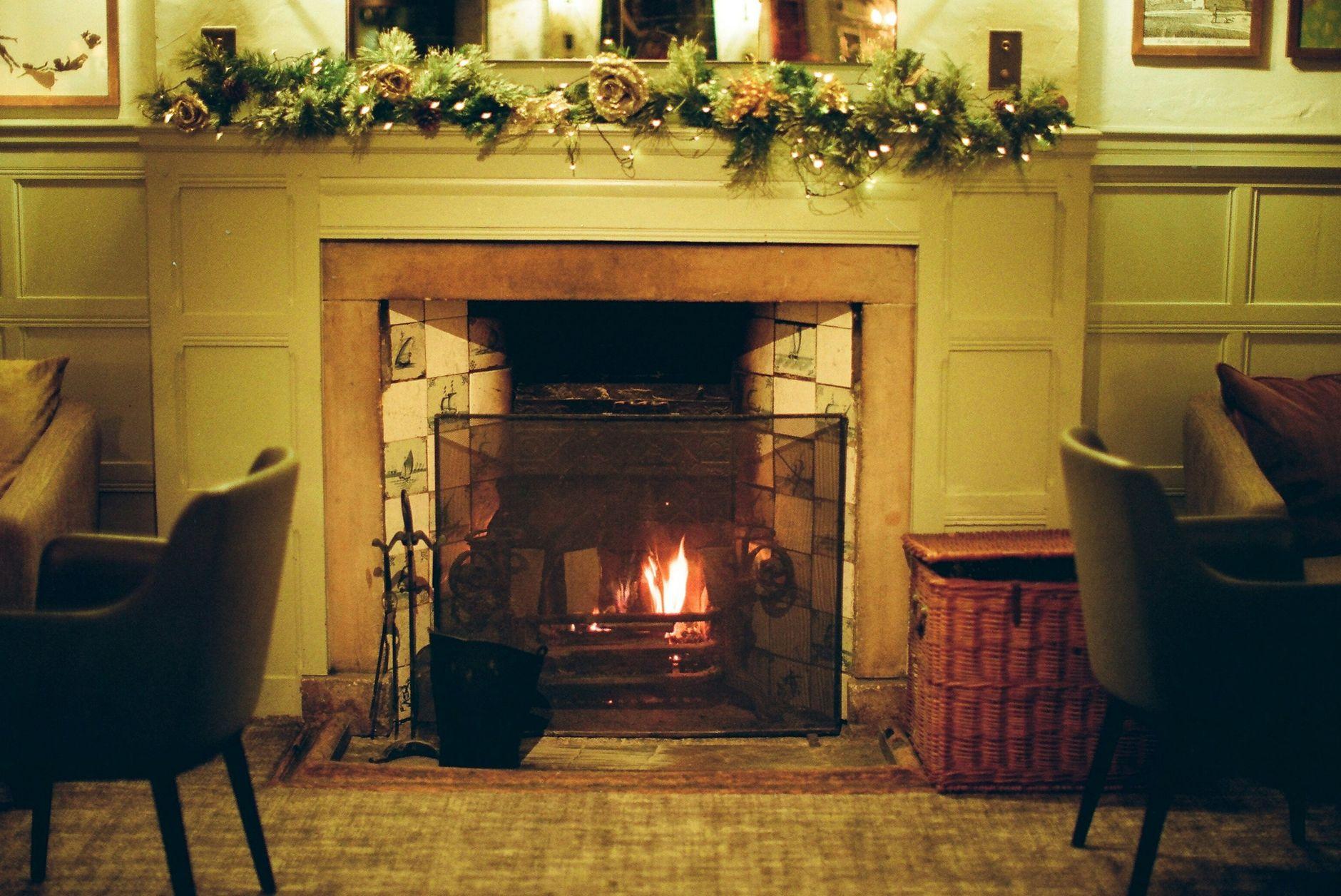
Two routes to the same flame
Owners who want gas heat in a Los Angeles living room usually arrive with one of two ideas. One keeps the brick fireplace and sets a sealed gas unit inside it. The other leaves the old fireplace alone, or starts in a room that never had one, and builds a new gas fireplace into a different wall. Both give a real flame behind glass and warmth you can feel from the sofa. They part ways on cost, on how much of the room changes, and on how the finished wall looks.
Route one: convert the firebox you have
An insert is a steel box holding a burner, a glass front and a trim frame, sized to slide into the masonry opening. Its exhaust leaves through a metal liner fed up the inside of the old chimney to a cap at the top, so the gases follow the path the wood smoke used to take.
What it does to the room: the fireplace stays where it is and keeps its proportions. A trim panel covers the gap between the insert and the brick, and you choose how it reads. Black steel, a thin bronze line, or almost nothing at all when the tile is cut tight to the box. The brick, tile or stone around it can stay, be refaced or be replaced outright.
Fitted into your brick firebox with its liner, an insert from us runs $2,650 to $5,300. Inside that range, the figure moves with the size of the opening, the size and features of the unit (a wider glass, a blower, a remote, a reflective inner panel), how tall the chimney is, and how far the gas line has to travel.
It suits a house where the firebox is a usable size, the chimney is sound and you like where the fireplace sits. Our fireplace inserts page covers the units we fit.
Route two: build a new gas fireplace
The second route is a sealed gas fireplace set into a framed wall, venting through the wall behind it or up through the roof with a pipe of its own. No chimney is needed. That makes it the answer for a house with no fireplace, a family room addition, a primary suite, or a wall whose brick chimney came down after the 1994 quake and was never rebuilt.
What it does to the room: you design the wall around it. A linear unit with a long, low flame suits a smooth plaster wall or a media wall with the television well above. A traditional unit with a taller box suits a stone surround and a mantel. Framing, finish and any raised hearth all become part of the build.
Framed in and vented, a brand new gas fireplace comes to $4,250 to $8,500. The vent route and its length, the width of the unit, the framing and whether a new gas line has to cross the house decide where yours falls.
Side by side
- Where the flame sits. Insert: in the old opening. New unit: wherever a vent can reach.
- What changes on the wall. Insert: the opening and its trim; the face can stay. New unit: the whole wall is new.
- What the chimney has to offer. Insert: a sound stack to carry the liner, with a crown and cap in good shape. New unit: nothing.
- Published price. Insert: $2,650 to $5,300. New unit: $4,250 to $8,500.
- The old fireplace. Insert: it becomes the gas fireplace. New unit: it can stay as a wood fireplace or be closed off as a separate job.
When the chimney makes the choice
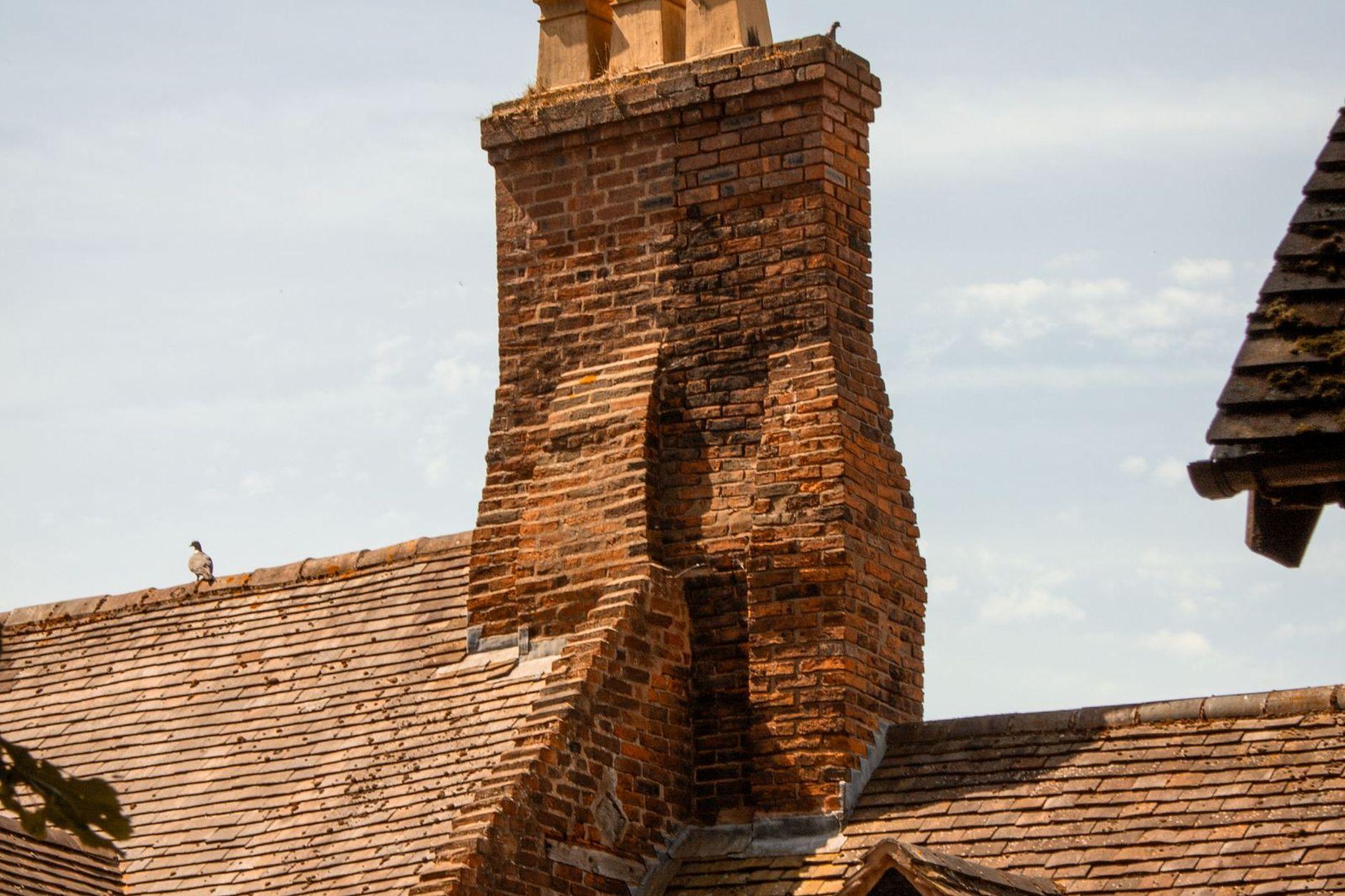
Sometimes the decision is made before the catalogue opens. An insert depends on the chimney above it. If the camera finds the flue cracked through, loose brick above the roofline, or a crown letting rain into the masonry, those repairs come before the insert or with it. On a few houses the stack is in such poor shape that a new gas fireplace elsewhere, plus closing off the old one, costs less overall. Once we have looked, we tell you which way the numbers fall.
Small openings are the other case. Very shallow fireboxes and the little corner fireplaces in some older bungalows may not take an insert with a flame worth having. Then a new unit, or a different style of insert, is the honest answer.
What sets the written figure
The two ranges above are for the unit installed. The written scope adds whatever the house needs around it: refacing, a new mantel, firebox or chimney repair, a new cap. Each item gets its own line and its own price, so you can lay both routes next to each other on paper.
Tell us which route you lean toward and the width of the opening you have now. We call back to book a measuring visit, look up the chimney and check where a gas line and a vent could run.
A note on looks
The biggest visual difference is the glass. An insert's glass sits inside the old opening, so its shape follows the 1920s or 1950s brickwork around it. A new unit's glass can be any shape the maker offers, so the wall is planned to the flame rather than the other way round. If you love the shape of the opening you have, the insert keeps it. If that opening always looked too small or too square for the room, a new fireplace can fix the proportions.
Heat is the other difference. A larger sealed unit placed on an inside wall can warm more of the house than an insert tucked into a brick box on an outside wall, because less of its heat soaks into masonry. For most Los Angeles living rooms either one is plenty for a winter evening.
Next step
Whichever way you lean, the first visit is the same: measure the opening, look up the chimney, and find a route for gas and a vent. Ask for that visit on our contact page, and mention the room and the finish you have in mind. If the chimney is in question, our post on the inspection before a hearth remodel explains what we check first.
Turn the Plan Into a Drawing
Farnham measures the wall and opening, checks the firebox and flue, and brings samples of stone, tile and plaster to the house. Our crews work out of Los Angeles and cover Bell, Downey, El Monte and the cities listed on the areas page.